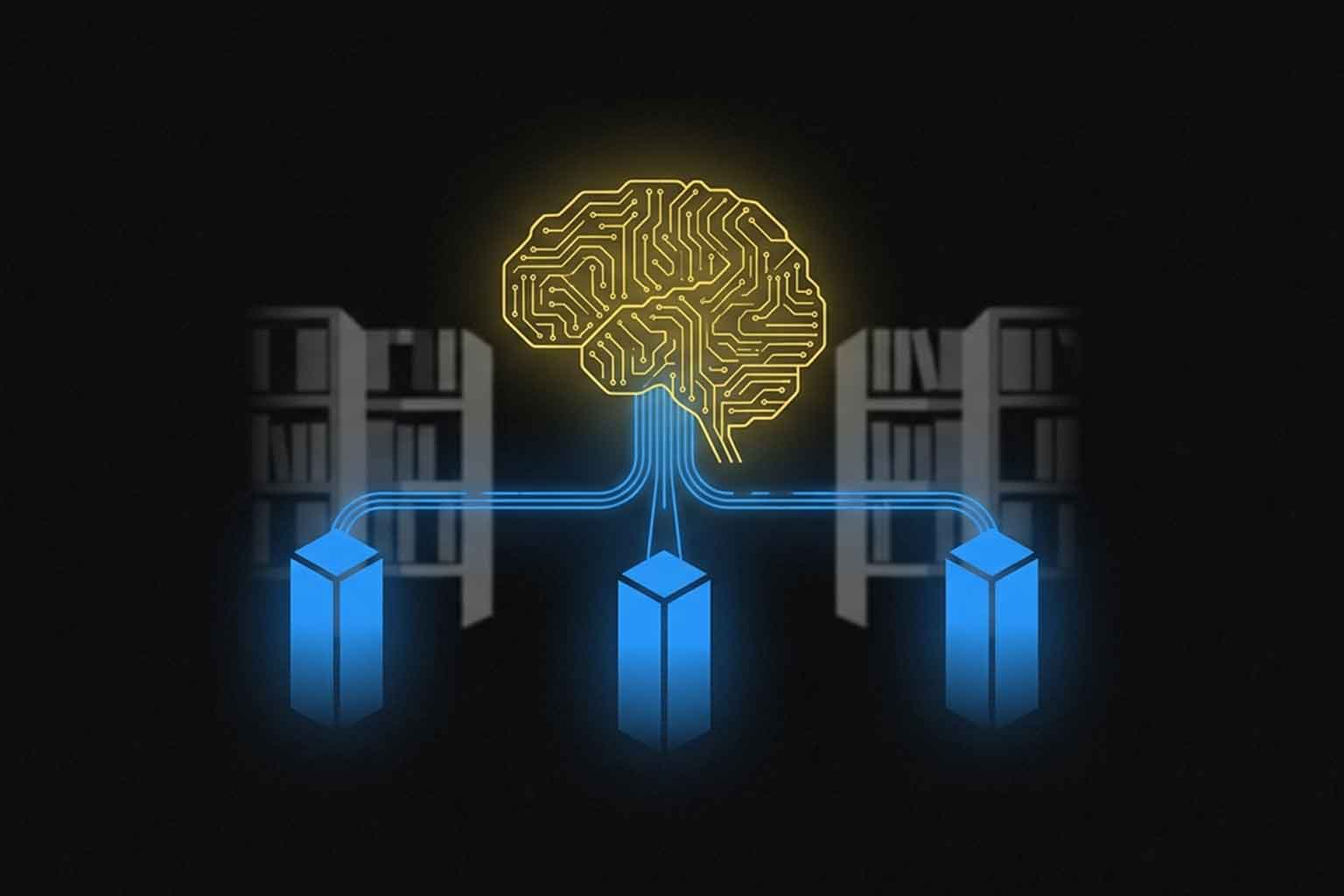
For decades, SEO has been relatively simple and clear – how to rank at the top of the Google search list. Today, the entire process is changing fundamentally. More and more users are switching from Google search directly to AI tools like ChatGPT, Perplexity, and Google Gemini to find their answers, completely ignoring the Google search engine. Automatically, the question arises: How does AI choose and provide the answer to the user?
An AI does not just invent an answer; it synthesizes it from parts of articles from trusted sources, i.e., pages with strong authority. What does that actually mean?
Let’s imagine an example where a user types into an AI: “how can people see my product on the page in Germany?”. The old model broke this down by keywords, and although you might have had a perfect article on that topic titled “Visibility of your product in Germany,” Google might have ranked it lower or even bypassed it entirely because the article does not contain words like “see” and “people.” My point is – it was too literal.
AI does not search that way. AI understands, if I may call it that, “semantic proximity,” i.e., it recognizes the meaning of the question. It knows that words like “people” and “see” are not separate but a key part that tells it WHAT the user wants. Thus, your page from the previous example will be ranked because it is in the center of the “semantic proximity” of the user’s question.
What happens behind the scenes – how are AI answers generated
AI breaks down your content into parts and runs them through three filters:
- Contextual mapping: It doesn’t count how many times you wrote the word “Germany” or “product,” but analyzes signals for understanding that tell it whether you truly master the topic and are not just entering keywords.
- Creating authority: AI doesn’t just offer your link but extracts the essence and creates from it the answer it offers the user. At that moment, you are no longer just one of the ranked links but an authority that AI relies on.
- Logical legitimacy: If your page shows expertise (E-E-A-T) and, very importantly, connection to a location, AI ranks you as the most reliable answer in that thematic circle.
The danger of AI-generated texts on your page
Now that I have explained how AI synthesizes answers, I believe it is automatically a bit clearer why it is dangerous to post AI-generated texts on your page. AI desperately seeks “handwritten texts,” experts, authorities, and authenticity. If it recognizes that the text was written by another AI, it automatically recognizes neither authority nor expert and automatically degrades your ENTIRE page, not just the given text. AI will not write an article, read it, break it down, and then provide an answer to the user based on the article it wrote itself. AI seeks what it cannot create itself – your experience, a specific analysis of a problem, and the human touch.
That is why in 2026, it is better to write one article by hand than to generate hundreds of articles with AI.



Leave a Reply